Monday, April 7, 2014
celticgods: Céad míle fáilte
celticgods: Céad míle fáilte: Now that St Patrick's Day has passed by and the world has as per usual forgotten about Ireland, the Irish and their history I am putt...


Céad míle fáilte
Now that St Patrick's Day has passed by and the world has as per usual forgotten about Ireland, the Irish and their history I am putting this down as it has been on my mind for a while.
My friend Jim Morrow the lover of Yeats and son of the West tells me there is a new history of Ireland he is reading and related to me how difficult it is to read about Cromwell's conquest. This from wikipedia:
The extent to which Cromwell, who was in direct command for the first year of the campaign, is responsible for the atrocities is debated to this day. Some historians[5] argue that the actions of Cromwell were within the then-accepted rules of war, or were exaggerated or distorted by later propagandists; these claims have been challenged by others.[6]
The impact of the war on the Irish population was unquestionably severe, although there is no consensus as to the magnitude of the loss of life. The war resulted in famine, which was worsened by an outbreak of bubonic plague. Estimates of the drop in the Irish population resulting from the Parliamentarian campaign vary from 15–25% to half and even as much as five-sixths. The Parliamentarians also deported about 50,000 people as indentured labourers.
This from Irish Central:http://www.irishcentral.com/news/entertainment/Irish-American-Stephen-Colbert-to-replace-David-Letterman.html
Clearly the "Lord Protector" was responsible for yet another of Ireland's "holocausts", perpetrated by the English over the ages. The English to this day don't understand why the Irish in particular do not wish to be maltreated and denigrated as second-citizens, to be cursed as "papists", etc by joining them in the "Greater Britain" which now seems to be devolving anyway.
For me I have always been astounded by the virulence of the hatred the English developed for the Church in such a short time and for the most immoral and flimsiest of reasons.
Today the media in Europe, Canada and the USA never discusses a more complete Irish history which must include an honest look at all the nightmares visited on Ireland and the Irish by the English through power, greed and hateful racialism down through 800 years.
In our time if it is discussed at all, it is as if Irish history begins with the Easter Uprising of 1916. The centuries before that occurrence - all of the complexity, characters progress, defeats, movements, and political discourse - is submerged below a sea of British history in which the Irish are viewed as ungrateful, contrary, bog-stomping, savages, quaint in manner and appearance when the English observer feels benevolent, and ugly, backwards, and violent when he's not.
Just as Europeans, (who love to call the USA "racist") never seem to have a frank, open, serious debate on their parts in the African slave trade. These nations like Spain, Portugal, France, Holland and of course England that commenced, developed, profited immensely by, and in the end summarily abandoned all responsibility for the victims of what must be viewed as the worst single atrocity in the history of human interaction.
When one looks back and compares it is easy to see that the English practiced for their future empire, on poor Ireland and its peoples, instituting all the hateful policies (rendition, deportation, partition, racialism, genocide, forced-labour plantations) that became so well known as Britannia ruled more and more of the world's peoples. When it became apparent there weren't enough Irish to man their outposts, they plundered an entire continent to staff their sugar, cotton, and coffee plantations.
They love to point fingers now, the Europeans, and perhaps that is a good thing, but at one time they countenanced no interference or showed any tolerance toward critics of their imperial will. I think it's high time for more serious re-evaluation and compensation if not reparations.
Wednesday, January 29, 2014
Part Two of The 80's, or I'll take you to a restaurant that's got glass tables, so you can watch yourself while you are eating
Mirror in the bathroom, click click click - Part 2
Ok so we had our look down, right smart!
On our first visit to London together the dollar was strong against the pound the Christmas and post xmas sales were on sooooo, we went a bit nuts.To the West End we went where I found a peg-legged prince-of-wales checked double-breasted suit with tight pleats and small cuffs, and a pair of blue baggy trousers that tapered down very tightly to the cuffed ankle and were lined which made them very comfortable and warm during the challenging NY winters. I had bought these new in London on the King's Road across the street from where Vivienne Westwood's shop Sex had been..those,.plus a pair of patent leather dress lace-ups and a pair of pointy blue perforated shoes with Doc Marten soles further down the street. I wore those blue perfs or the black Loake's tassels often with those blue pants.

Antoinette had a really hot vintage black and white patterned crinoline dress, a Dior knockoff suit with the cutest miniskirt from Renaissance, plus in London we got her this hand tooled and distressed leather jacket w/ matching tapered trousers. The outfit was striking, she still has it, beautifully lined too, people used to stop her in the street in Manhattan.
We never left home without our shades, Ray Bans of course.....
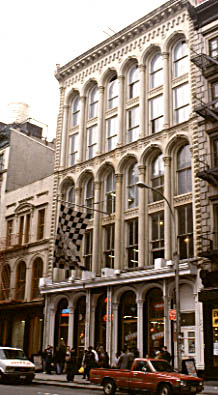
So one payday I wandered down Broadway to Canal Jeans' location there and after drifting past the poseurs and poofters I hit the men's racks, half an hour later, for less than $50, I was leaving the shop with a pair of woolen, deep-pleated, big cuffed, subdued vertically striped, high-waisted trousers (like I had seen in a Madness video), a men's vintage white cotton broadcloth shirt with narrow button-down collar, and a men's waistcoat that complemented not only the shirt & trou, but the two pairs (1 pair black, 1 pair pale grey) of Italian-made men's lace ups i had found on W8th Street 2 or 3 door s down from the 8th Street Playhouse, the theater that MADE Rocky Horror Picture Show a classic, as well as being the only theater to show films by Jean-Pierre Melville and others.....
So we went out to Peppermint Lounge, Negril, Irving Plaza, Roseland Ballroom, The Ritz, The Palladium, CBGB, Bowery Ballroom, The World, The Hotel Diplomat, the Reggae Lounge and so on........

The East Village at that time was the epicenter for all our activities. There were a couple of restaurants and bars that existed on the fringe which did a great weekend business from the Bridge & Tunnel people who wanted to be cool but found the Lower East side a little too edgy and those places were as far as they went and their purpose in the world has now transferred to Hoboken NJ so the Jersey kids don't have to cross the big Hudson River to scary ol' New York any longer. I am sure their moms sleep more comfortably now.
But on St Mark Place and Avenues A or B or 7th street there were Ukranian & Polish restaurants at which we could all afford to eat-.pierogies, pot roast, mashed spuds, sauerkraut boiled green beans endless cups of coffee it was pretty much like what my German grandmother made at home and cost 4 bucks!

The Eastern European social clubs had pool tables and sold Heinekens for a buck-fifty and we would just nip out across the street to Tompkins Square Park to smoke our weed.and then back across again.
It really was like a big playground for the over-18 year-olds and the cops didn't care as long as you weren't violent or naked (before midnight at any rate, afterwards.....).
The paths through Tompkins Square Park were like the punk Champs Elysee and 5th Avenue where everyone paraded their take on style/fashion/politics/protest/hip/glam/flash personified by hippies/punks/goths/artists/mods/skinheads/... deep breath .... rockers/skateboarders/Rastas/New Romantics/club kids/greasers, etc.one not-so-grand faire de promenade of anarchists and wanna-be's....

.....socialists, communists, Hare Krishnas, born-againers, right-to-lifers, drug vendors,squatters, homeless et cetera, and on up St Marks they went. Sometimes though, in those days, you could find yourself alone in that park. Undistracted, peaceful almost bucolic.

Eventually the once vibrant vintage clothing sources dried up one by one, the cool clothes disappeared leaving vestments fit only for lumberjacks (grunge) and mental hospital refugees (hipsters) which is what you have seen the past 20 years. The new fashions were not what my very good mate, Nigel, or I could stomach- giant lapels, giant wide neckties, stupid contrasting collars and cuffs Yuuccchh!!!
So we took the bold step of visiting the Mohan Brothes in the Lincoln Building on 42nd Street directly across the street from Grand Central Terminal and the Pan Am Building and one block further up Vanderbilt to Conway's Bar our local.
The Mohan Brothers were Indian chaps who ran ads in the NY Post & the NY Daily News offering bespoke suits and shirts for the discerning New York Knicks, Nets, Giants, Yankees, etc...


Nigel and I met up one lunch hour and took the elevator up to visit the Mohans and were met by very nice fellas who showed us dozens of books of samples as we tried to explain that we were trying to re-create the 60's Brooks Brothers suits that were the mod formal dress - wool worsted, narrow lapels, 3 buttons, double side vents. Their offer was hard to refuse so we didn't - 3 bespoke suits, any fabric we liked, for less than $700 US dollars.
Even if they turned out just OK you couldn't beat $230 per suit anywhere, and to our delight they turned out pretty damned well.
Well, 2 fittings and one month later we were called to pick up our suits. I had ordered a plain dark blue suit medium weight, a charcoal gray cashmere, and a Glen Plaid replica of Sean Connery's suit in Goldfinger.They had your name sewn on a label on the inside pocket, fecking magic.

Matched up with our English and Italian foot wear, "Made In USA" Oxford dress shirts, narrow vintage ties, Nigel and I presented a very sharp contrast to the off-the-peg Italian made designer,suits we saw in the street and in our offices. I mean, bankers still wore only grey or blue baggy recent vintage Brooks Brothers (who had lost their way over the years) or department store knockoffs thereof. The "stylish" guys (Armani, Cavani, baloney) had kipper ties, garish shirts, big braces, often in braided leather, and matching expensive designer- tasseled wing-tipped shoes.
Oddly, looking at the ads right now and how the men on tv like Don Draper in Mad Men or Michael Westen in White Collar, or the characters in the very aptly named "Suits" are dressed, fashion has only just caught up to us.
Saturday, December 7, 2013
The 80's, or I'll take you to a restaurant that's got glass tables, so you can watch yourself while you are eating
The 80's. The decade, not the age group Part 1
In 1980 my brother Patrick and I were obsessed with bands out of England, as punk, kicking and screaming lost steam, we followed the Clash, the Specials, the Beat, Madness, Selecter, Reggae.


Our dad had died in 1977 and without realising it the only person on this planet to which I felt I had to live up to was gone. Sorry ma, but that's the way it was.
Suddenly I was free, young and open-minded and was living in Fort Lee NJ with the woman that I already knew was the love of my life and who would become my wife early the next year in Kingston Jamaica.
Suddenly I was free, young and open-minded and was living in Fort Lee NJ with the woman that I already knew was the love of my life and who would become my wife early the next year in Kingston Jamaica.
My new-found freedom was evident in several ways if anyone had cared to look: I'd cut my hair short into a flattop, I was clean-shaven, my dress had drastically changed - the cowboy boots had gone- so too had sneakers mostly, replaced by dress shoes and work boots. Calvin Klein jeans were banished in favour of a return to the classics namely Levis 501 shrink-to-fits which very conveniently were sold at The Gap where I worked up until 1981 (for $19.95) and then only in NY and SF as only the urban gay communities had kept 501's alive during the dark fashion night of the disco onslaught. I had a second-hand army jacket covered in badges from the afore-mentioned bands as well as Jamaican musical influences (note: NOT the Wailers).
The changes were largely intuitive and retroactive as I had grown up wearing similar stiff blue jeans Wranglers or Levis with turn ups, plus hand-me-downs from my older brothers or my dad 's yellow wind breaker.My haircut was from the 50's / 60's, the musical influences were also from an older time too. Eddie Cochran, James Brown, STAX, Buddy Holly, Studio One, yeah mon, rhythm come forward. I was re-discovering my mod youth and still young enough to pull it off a second time.

FAST FORWARD to 1983, 1981 & 1982 were spent in Kingston Jamaica and that story is for another time gentle reader.

FAST FORWARD to 1983, 1981 & 1982 were spent in Kingston Jamaica and that story is for another time gentle reader.
Bam! 1983 Back in NY, working in schlock shop ad agencies ( Sleepy's mattresses, Crazy Eddies, B&H Cameras, The Wiz...) taking classes at School of Visual Arts with Antoinette as she was freelancing at type-shops and department store ad departments, saving what cash we could for the baby that was suddenly coming.
Ronnie fucking Raygun was still in office sadly surviving Hinckley's bullet to return and accelerate the country's slide down the greasy Bat-Pole into the abyss in which we find ourselves 30 years later. His smug evil female counterpart Thatcher presided securely over the UK.
Guys like me wanted to look good but we couldn't afford tailors or the posh men's shops, besides they were all selling over-tailored, padded shoulders double breasted stuff with lapels you could land jets on. Orrrr they were all pastel coloured Don Johnson wanna-be's still wearing Capezios etc....
We shopped in the East Village at Trash & Vaudeville, 99X for our Doc Martens and Loakes and at another shoe store across the street on St Marks Place. I found really nicely made Italian lace up shoes on West 8th Street at reasonable prices, but for for just about everything else there were the thrift shops on lower Broadway and Spring Street in Soho like Canal Jeans and Hollywood Legend.
For dress-shirts the button-down classic cotton Oxford shirts I shopped at Macy's or B. Altmans. Their store brands were nicely priced and the quality of the US made shirts was miles better than the Fred Perry or Ben Sherman dress-shirts.

Altman's on 5th Avenue was possibly my favourite department store. The polished wood floors, the understated classy layout of its departments, not to mention the Italian Renaissance style exterior designed by Trowbridge & Livingston the firm that did the Bankers Trust Bldg and the Hayden Planetarium all added to the pleasure of shopping there.

As one can see it was all a mix of the old and the new. We were cut off from the money and the political power at least during the day but at night time New York (or London) was ours. We might have been hungry, and 'self-medicating' with whatever we could lay our hands on, but we had energy, there was just a buzz, a vibe, a current that was felt as you stepped out onto the street. Yes the night was ours because we could stay up all night to take it, and while our lives existed in small clearly defined areas mostly on the geographic fringes, our influence was being felt in ever widening circles and digging away relentlessly at the center. Of course like the anti-war movement and the hippies it would all get co-opted eventually and the the same dickheads we hated just took our shit and sold it on main street. This happened because there was no organised political bonds between our splintered groups of punks, mods, hippies, rockers, skinheads New Romantics etc... Everyone would protest the closing of a neighbourhood green space or the ousting of squatters but when the cops moved in and cracked heads the outcry was fierce for a week and then the real estate investors did what they wanted in the first place.

At night you could see groups of people walking, skulking, shuffling, leaping - their clothes proclaimed their tribal affiliations and if you had no dosh, no readies, no play money this is what you did, you met up with yer pals, yer mates, yer crew and walked around the city and smoked cigarettes. Many just captured a park Bench in Tompkins Square Park that wasn't already been commandeered by one of the legions of homeless (or Jean Michel Basquiat) and watched the parade pass by.
So for a while there was an art scene that fed off the music scenes, that in turn fed the fashion scenes and for a while it existed apart where it would thrive. What we wore when on our own anyway, what we went to see in galleries, or hear in nightclubs was unlike anything that was being worn/seen/heard uptown.
To be continued....
Ronnie fucking Raygun was still in office sadly surviving Hinckley's bullet to return and accelerate the country's slide down the greasy Bat-Pole into the abyss in which we find ourselves 30 years later. His smug evil female counterpart Thatcher presided securely over the UK.
Guys like me wanted to look good but we couldn't afford tailors or the posh men's shops, besides they were all selling over-tailored, padded shoulders double breasted stuff with lapels you could land jets on. Orrrr they were all pastel coloured Don Johnson wanna-be's still wearing Capezios etc....
We shopped in the East Village at Trash & Vaudeville, 99X for our Doc Martens and Loakes and at another shoe store across the street on St Marks Place. I found really nicely made Italian lace up shoes on West 8th Street at reasonable prices, but for for just about everything else there were the thrift shops on lower Broadway and Spring Street in Soho like Canal Jeans and Hollywood Legend.
For dress-shirts the button-down classic cotton Oxford shirts I shopped at Macy's or B. Altmans. Their store brands were nicely priced and the quality of the US made shirts was miles better than the Fred Perry or Ben Sherman dress-shirts.

Altman's on 5th Avenue was possibly my favourite department store. The polished wood floors, the understated classy layout of its departments, not to mention the Italian Renaissance style exterior designed by Trowbridge & Livingston the firm that did the Bankers Trust Bldg and the Hayden Planetarium all added to the pleasure of shopping there.
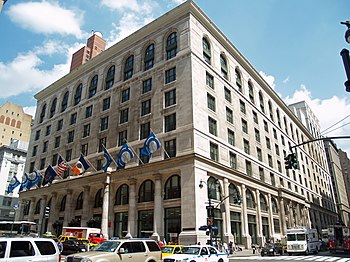
As one can see it was all a mix of the old and the new. We were cut off from the money and the political power at least during the day but at night time New York (or London) was ours. We might have been hungry, and 'self-medicating' with whatever we could lay our hands on, but we had energy, there was just a buzz, a vibe, a current that was felt as you stepped out onto the street. Yes the night was ours because we could stay up all night to take it, and while our lives existed in small clearly defined areas mostly on the geographic fringes, our influence was being felt in ever widening circles and digging away relentlessly at the center. Of course like the anti-war movement and the hippies it would all get co-opted eventually and the the same dickheads we hated just took our shit and sold it on main street. This happened because there was no organised political bonds between our splintered groups of punks, mods, hippies, rockers, skinheads New Romantics etc... Everyone would protest the closing of a neighbourhood green space or the ousting of squatters but when the cops moved in and cracked heads the outcry was fierce for a week and then the real estate investors did what they wanted in the first place.
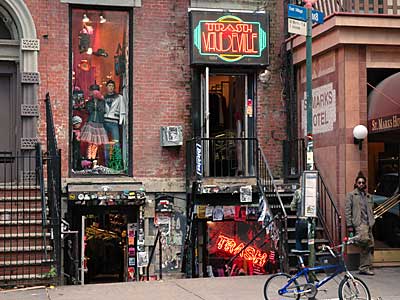
At night you could see groups of people walking, skulking, shuffling, leaping - their clothes proclaimed their tribal affiliations and if you had no dosh, no readies, no play money this is what you did, you met up with yer pals, yer mates, yer crew and walked around the city and smoked cigarettes. Many just captured a park Bench in Tompkins Square Park that wasn't already been commandeered by one of the legions of homeless (or Jean Michel Basquiat) and watched the parade pass by.
So for a while there was an art scene that fed off the music scenes, that in turn fed the fashion scenes and for a while it existed apart where it would thrive. What we wore when on our own anyway, what we went to see in galleries, or hear in nightclubs was unlike anything that was being worn/seen/heard uptown.
To be continued....
Thursday, November 21, 2013
celticgods: Port Antonio, Jamaica
celticgods: Port Antonio, Jamaica: PORT ANTONIO, JAMAICA - ONE OF A KIND Where else in one place does one find the intermingling of the histories of such dispara...
Port Antonio, Jamaica
PORT ANTONIO, JAMAICA - ONE OF A KIND

Where else in one place does one find the intermingling of
the histories of such disparate groups as the Tainos, the Maroons, the Spanish/French/British, American business and leisure, the birthplace of
Caribbean tourism, the start of the international banana industry, plus the
rich and famous of the entire 20th Century?
Why, Port Antonio Jamaica, of course!
The town of Port Antonio is situated in the northeast corner
of the island of Jamaica. It sits on beautiful twin harbours, guarded to the
south by the majestic high ridge of the Blue Mountains and the entire area east
and west of the town is dotted by coves and beaches carved out of the
primordial rock by the eternal caresses (or bashing) of the waves from the Caribbean. Lush
foliage fed by its numerous emerald mountain rivers and streams and plentiful
rainfall make Port Antonio and its environs the place you always dreamed about
in the Caribbean.
Jamaica’s original inhabitants the Tainos lived here and
traces of their ancient civilization have been found in the caves of the
limestone hills and along the plentiful waterways.
Columbus found Jamaica on his second voyage to the Americas
and the
Spanish named the port “Puerto Anton”
after the son of an aristocrat. The Spanish did little else in the area.
Jamaica was taken by the British in 1655 and they retained
the town’s name and made it the capital of the parish of Portland so-named for
the Duke of Portland, a favourite of the king. Captain Morgan during his tenure
as governor used the hills around Port Antonio for look-out posts due to it's strategic location on the passageway between Cuba, Haiti, and Jamaica that scanned the
sea for the approaches of Spanish or French invaders. The British developed
agriculture mainly sugar, coffee, cocoa, coconuts, annotto and cattle ranches.
Fort George on the Titchfield peninsula and Navy Island across the inlet
dividing the 2 harbours was the base for the Royal Navy and the fort was manned
right up to the 1960’s.

In the early days of British occupation Port Antonio and in
fact all of the eastern end of Jamaica, were under threat of attack from within
by the Maroons. The Maroons (from the Spanish “cimarron”, for “wild”) were
released Spanish slaves later joined by slaves that escaped their British
masters and formed communities in the high Blue Mountains and were clever and
fierce opponents, eventually forcing the British to sign a peace treaty and
designate them as a separate nation within the colony, free from further
molestation. It was the Maroons that
developed the technique of cooking and preserving meat by cooking feral pigs
using low smoke (to escape detection by the British) on barbecues made from
pimento (allspice) wood which we now
know as Jerk. A yearly festival commemorates this uniquely Jamaican cuisine phenomenon
in Boston east of Port Antonio.
Americans began arriving after Captain Lorenzo Dow Baker made
his first visit to the island in 1871 looking to fill his empty freighter in
order to make his return trip to the US profitable. Baker found bananas,
and was soon back as were others as the “yellow gold” boom began bringing
exotic tropical fruits in quantity to US markets for the first time and making
Port Antonio the wealthiest town in Jamaica after Kingston. Dow’s Boston Fruit
Company eventually had 40 banana
plantations and this was the beginning of one part of what became the United
Fruit Company that grew bananas all over the West Indies, Central and South America which became known
as Chiquita years later.
So, how did tourism come to begin at Port
Antonio? Simple, the fruit steamers also had staterooms for passengers and the
steamship lines supplemented their earnings by advertising for holiday makers to
enjoy the salubrious climate of Jamaica, “Island in the Sun”.

Vybh0g~~60_57.JPG)
Soon the grand Titchfield Hotel was build on a bluff
overlooking the harbour, the town and up to the highest peaks in Jamaica. This
brought the new Hollywood royalty of silent films, Broadway and the West End. Wealthy
and famous people from the arts, business and sciences began to arrive and some
built homes, such as the daughter of Louis Comfort Tiffany. The world’s newspapers
followed their exploits and travels so that these style-maker’s holidays in the
tropics began to be lusted after by the wider public.
Fast forward past both World Wars and two similar visitors
from vastly different parts of the British Empire turned up, Ian Fleming and
more important for Port Antonio, Errol Flynn. Flynn sailed into Port Antonio
after being shipwrecked in Kingston and stayed off and on for 20 years. He
became part of the local scene and brought his pals from all over the globe
co-opting the banana rafts for their Rio Grande river excursion picnics and
giving an iconic activity to the visitors of the area which continues to this
day.

In the late 50’s Frenchman’s Cove resort was built on a
coastal plain east and an iconic beach east of Port Antonio which drew several
dynasties of European royalty, stars of stage and screen, business tycoons,
artists, musicians etc, in other words the jet-set had discovered Port Antonio.
Some people returned year after year and began to build vacation homes in the
hills and coves around Frenchman’s Cove, named San San, Alligator Head or the
Blue Hole.

Today the town is being renewed, infrastructure being renovated,
Trident Hotel and Castle has been re-imagined and the long promised investment
in Port Antonio appears to be close to reality, keep your fingers crossed!
Port Antonio has retained much of its original charm, and we
urge those who are curious to enjoy a real Jamaican Caribbean experience, so,
come catch Portie fever.
Sunday, June 30, 2013
celticgods: Wedding and almost Funeral
celticgods: Wedding and almost Funeral: Frank, we'll go to the Plaza Diner, OK? Yeah that's cool. The traffic heading back to NJ was moderate and as we crossed the Geor...
Subscribe to:
Posts (Atom)