Sunday, December 30, 2012

XMAS season Road Trip


We were in DJ's wife's car a Hyundai Veloster which he called the "molester", and which we both re-named the LFC, or "Look-Fast-Car". However what the Veloster lacks in internal-combustive propulsion it makes up for in handling prowess, we were flying towards Ocho Rios, DJ's right foot firmly planted on the floor in order to arrive at Arosa Meat Processors before the appointed 12:30pm closing on Saturdays.

We slowed our progress through Port Maria the Parish capital of St Mary as is usually necessary to allow for Police checkpoints, and increased traffic. As we approached the bridge which led to the exit from the town's main drag I reminded DJ of the usual police presence on the western side of the bridge as one approaches the court house and Parish church where Ian Fleming was married (and DJ's brother too for his third time). Sure enough there was a Suzuki Jimny full of cops pulling over a Toyota Hiace minibus full of people.


 We slowly pulled around and as we did I spied ahead of us a white Mercedes Benz M Class of recent vintage and imagined I detected a faint trace of Appleton VX in the air. As we approached the Merc's rear I was more certain that the driver of the vehicle was indeed Dr Ron Duquesnay the president of the Sir Henry Morgan Angling Association aka the "Commodore" as I liked to call him. With the strikingly beautiful bay of Port Maria with its birthday cake island in the centre on our right and the double-apex turn around the headland ahead DJ decided it was a good time to overtake our friend at a less-than-prudent rate of speed. Ignoring the oncoming traffic, DJ pulled us level with a stunned Dr Ron and his side-kick Bob the Acct. and I waved and yelled as we overtook them at light speed, narrowly averting a certain messy death at the hand of an oncoming truck.

DJ put the hammer down as we blasted past Blue Harbour, Noel Coward's beachfront home in order to make up the time we lost as I called the Commodore on the phone and arranged a rendezvous at our terminus of Arosa Meats. Suddenly DJ veered off the road almost directly across from the entrance to Ian Fleming's home "Goldeneye" in Oracabessa. Stopping, he abruptly jumped out and declared me the pilot for the remainder of the journey. I took up the challenge, shrinking the oncoming Commodore Ron's image in the rear view mirror by some nifty overtaking of blocks of three and four cars at a go as we passed through Oracabessa, Boscobel, Rio Nuevo and Prospect until it vanished completely and we pulled into the Arosa parking area with minutes to spare.


We finished our pork product purchasing and like magic Dr Ron and Acct Bob rolled up and true to form and like good Boy Scouts they were travelling prepared. In the back of the Benz was 2 bottles of Appleton VX & Estate Special, 5 litres of coconut water and a cooler full of ice.

Finding some shade under the tailgate we toasted one another's health and the New Year and a good time was had by all!

Merry Christmas, Happy and Prosperous New Year to All!

Thursday, November 15, 2012

Bars

I'll admit that when I was young I was sceptical of bars, but that was understandable as my entire knowledge of them was my mother's warnings about the evils of bars and the alcohol sold within. I never knew my father to go into a bar. Then I turned 18 the same year they changed the laws to allow 18-yo.'s to vote and drink, so I got to vote for McGovern (r.i.p.) and enjoy ice-cold Heineken as we commiserated on Nixon's self-destructive soon-to-be-Watergate-contaminated victory. We went to a bar to celebrate Nixon resigning too!
Really I grew to absolutely love bars in New York City. Nigel and I pounding pints of Guinness or lager, smoking cigarettes, & scarfing down chips.


It was going to Irish-owned and staffed bars in the island of Manhattan that made me understand and appreciate good bar tending. There is also for bar patrons a certain etiquette and code of acceptable behaviours and real men understand and adhere to these and pass them on to the next generation, like not annoying the staff or other patrons, holding your liquor, paying your tab and tipping your server appropriately. Bar tending to me is one of the world's most important, vital and perhaps underrated professions in this world. I am not talking about people who tend bar while they are waiting for a call-back(talking on the phone to their agent or other actor friends) for a show/movie/play or to pay their way through college (leaning up in the corner with face in a book) though these situations do not necessarily preclude being a good bartender.


Patrick Conways on 43rd near to Vanderbilt hard by Grand Central was owned by two young brothers named Clancy and they were nice though business-like fellows. Their bar was always staffed by fellow Irish people. The bar men were just that, bar men. I never saw a woman behind the gleaming, immaculate, mahogany. For sure the restaurant had plenty of young Irish girls waiting the tables and working in the kitchen and dining rooms including the owners' sister. In my time I remember 4 of the barmen who went on to own their own bar and each of these was an attempt at replicating Patrick Conways' gleaming brass, wood and tile. We became such regulars, my brother Patrick, my friend Nigel and myself, that Friday didn't feel like Friday if we didn't see Sean, Liam, Martin and Edmond. The clientele was almost exclusively business people and the bar staff behaved accordingly -friendly but resserved, attentive but not intrusive in other words professionals.
In fact, the brothers themselves opened a second bar at 34th Street and 3rd Avenue called Patrick Kavanaughs which was similar but more of a neighbourhood place. The two brothers sold out eventually and returned home to Dublin as the nascent Celtic Tiger began to roar.  There were great Irish barmen all over Manhattan from the Plaza, to the Abbey, to Dempsey's, to the Central, to The Blarney Stone, to Swifts. 


The great NY bars were places for men, and not in a chauvinistic institutionalised way, but in the sense that men could congregate, be at their ease, talk or be silent, get drunk or not, spend a lunch hour, meet old or new friends, kill time or make a rendezvous for further perambulation with or without the social pressures of female society as one chose.
A good bar is and should be too a shelter from driving rain, blistering heat, or importantly the cold, cruel world. I've never been one to bend a barman's ear too much with personal tales of woe, save the one or two who were my pals outside of their place of employment, and even then I thought it best to make sure those were rare occurrences. 
My teetotal wife doesn't understand bars further than the fact that I am happy in them  and it is where I meet up with my like-minded pals ("Why don't you go play with your friends?") and that's as ok with me as it is with her.

Brian part 2

I was recalling an evening in the "East Village" today which was spurred by seeing someone's immediate Facebook location needlessly displayed for all to see on Facebook.
The eveningin question I had taken the train into Manhattan I recall from Queens, where Antoinette and I were crashing with her sister Peggy after our return from Jamaica. This was 1982 and my brother Brian was living between friends' flats in the East Village and Brooklyn. We met up near the 8th Street Playhouse
http://cinematreasures.org/theaters/4699
that lost treasure of a neighbourhood movie house where I saw my first Jean-Pierre Melville films under advice from the late great Andrew Sarris who was then the film critic of the Village Voice in its heyday http://en.wikipedia.org/wiki/Andrew_Sarris

What was nice in those times was that the crowds on 8th Street and Greenwich Village in general thinned out in the evening as you proceeded eastward (the opposite of Horace Greeley's exhortation!) and as you passed First Avenue you were away from the tourists, bridge-and-tunnelers, and other non-resident downtown revelers and entered a real New York neighbourhood. Brian suggested we eat over at the Odessa on Avenue A http://www.yelp.com/biz/odessa-new-york
In those times the Odessa fed emigrés from Eastern Europe the food from back home at diner prices and we had pot roast with gravy and pierogies for like 4 bucks. We then went up Avenue A to a bar near 10th Street that had a jukebox with a terrific selection of old R&B and rock and roll.We had a beer or two and then crossed over and stood in the park and burnt some rope as was our wont in those days.


Our former block of E.3rd Street.

Tompkins Square Park and the streets around it were nearly deserted, this pre-dating the great homeless invasion brought about by Reagonomics and the ruthless gentrification of Manhattan by real estate interests.

The Joe Strummer mural memorial on what was King Tut's Wah Wah Hut bar w/yours truly.

Brian seemed glad to see me, glad I had come to hang out with him. He had been by this time suffering more and more from some inner angst or demon which could make him restless and of which his drug use, the heroin specifically was I now believe both a symptom and self-prescribed remedy. Brian was intelligent and perceptive and like most of my family extremely sensitive. He was that evening as usual well versed on almost every current topic culturally or socially - local news and international, music, books, film etc- and those that knew Brian knew he was a voracious and catholic reader and as likely to be carrying the Silver Surfer as William Burroughs under his arm or in his satchel and every time he changed addresses he left behind him a small library. In those times I saw him more than anyone else from our family and my trick was to limit my exposure to him so I could control my own sadness and feelings of impotence that grew inside me when I was around him.
His unease seemed to ebb and flow, sometimes Brian acted like he was hunted by or hiding from unseen agents-quiet, jittery, curt-but mostly he was easy to be around, good and interesting company, generous materially and spiritually.

This night was a good one, one that has stayed with me all these years, recalled many times over the years especially when we moved into that neighbourhood, Antoinette, Sean and me, and we witnessed first-hand the evolution and gentrification of the Lower East Side. In fact in a few short years I stood pushing Sean on the swings sweeping the crack vials and hypodermic needles aside with my Air Wear soles in almost the exact same spot, where the playground had been moved as a renovation of the park was under way.

Renovation of St Brigid's Famine Church under way, after the idiot Catholic Diocese tried to demolish it.

Friday, August 24, 2012

Tropical Storm


The sea has been fighting itself all day
pushing eastwards battling westwards, churning
Blue, black, grey, steel, silver
Now it's night and the sea heaves invisible
Lightning provides the amusement now
as bands of squalls shower us with rain
thunder booms Isaac's approach

Saturday, July 21, 2012

Harlem Brixton


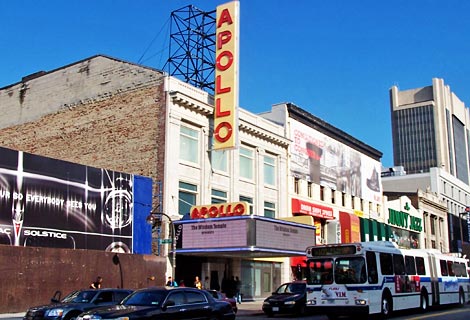
Harlem New York, like Brixton London, both lie abutting the most expensive real estate (both near rivers) in their respective entire countries. It was only a matter of time before they both became  "gentrified" (do hipster f**kwads qualify as gentry?). Both areas were the the centres of Black intellectual and cultural life in addition to being their physical addresses in large metropolitan cities.
Harlem as an entity and of course subtracting the elements of human racism and fear of the unknown "other"was always a mystery to me, and anyone who knows me long enough will remember my wondering aloud and often on why the nicest geographical area on the island of Manhattan, that begins at the northern edge of Central Park known alternately as Cathedral Parkway or 110th Street (consider: Central Park West, Central Park South, Fifth Avenue all addresses of the world's wealthiest, the most powerful and the most famous), hadn't been "reclaimed" by the moneyed long, long ago.I say reclaimed recalling the fact that Harlem once was the summer residence of New York's wealthy when New York mostly existed below 42nd Street. It wasn't that I desired this occurrence, to the contrary, it was only that I had reached a certain age, had become more cynical and was looking at this situation coldly in the context of the City in which I lived.
When gentrification of Manhattan began in the early 1980's why was the Upper West Side and Gramercy Park/Chelsea done first when in reality Harlem, for me at least, the jewel of Manhattan was always the ripest for the taking by the infamous New York granite-hearted property developers.
Harlem has more brownstones than the rest of Manhattan put together, plus large, solid attractive apartment buildings, and row-houses fronting wide avenues and shaded side-streets, set on hills with excellent subway and bus connections on the east and west sides plus they were adjacent to the major bridges that afforded exit to the other boroughs, suburbs and countryside to the north, east, and west. The residents of Harlem largely do not own their homes (save the Jamaicans) making them easier to shift. In fact Harlem has everything necessary to become a "new improved" Greenwich Village, a more gentile Upper East Side or perhaps a New York version of what Notting Hill has become.
My wife told me I was mad when I suggested we buy in Harlem, mainly due to the attention and hassle  our racial "impurity" might bring us, though we had vaguely started planning with her brother Beres (who thought like me!) to buy a small apartment building or a house with 3 flats. To go even further back, Mr. Watson, my wife's father, had planned to come up to New York from Kingston and buy a building for his two youngest daughters to live in and manage. Oh how I wish he had lived long enough to realise that ambition! Jamaicans like my wife's family are believers in property ownership and his 2 daughters were paying landlords rent you see...
As I am writing this I see in the news that Sylvia Woods proprietor of the venerable Harlem soul-food establishment on Lenox Avenue has passed on. I ate at Sylvia's only once or twice and that was way back in about 1975/6. It was a neighbourhood joint for my friend Mike Davis who was the drummer in our band. He lived on 124th Street & Lenox Avenue just a few doors down from Rice High School, a Christian Brothers school which had the same order of Brothers that taught my 2 older brothers and me. The food at Sylvia's I found was good soul food, kinda like somebody's mom gave you if you stopped for dinner. I had heard it wasn' t the same recently as her fame and clientele expanded, but I enjoyed the fried chicken, collard greens and rice just fine when I had them.
http://www.nytimes.com/2012/07/21/nyregion/changing-harlem-celebrates-sylvias-and-the-queen-of-soul-food.html?hp&gwh=F63DA1337E1500EC0E7A428EC68C96BD

Here's another sign of the shift from today's Sunday Times
http://cityroom.blogs.nytimes.com/2012/07/22/murals-painted-in-grittier-days-are-fading-from-125th-street/?hp&gwh=334A94BF1D545894C7D55BC36FE89958

Brixton lies almost dead geographic centre of London if one looks at a map. It was where many Jamaicans and other West Indians of the post-war Windrush generation (named for the steamship that brought many to England from the Caribbean) settled. Those brave souls that ration-era Britain enticed over to do the dirty work in the hospitals, bus and train yards, Postal Service, building sites etc.
Brixton and Stockwell were South London neighbourhoods that had lost their former glory and where there were rooms to let and landlords needy enough or greedy enough to forsake the usual policy indicated by signs found in the front windows of bedsits "No Blacks, No Dogs, No Irish".  Over the years it served many of the same functions for West Indians and Africans that Harlem did in the USA. It became a place where blacks felt free, were able to express their various cultures, could find their friends, their foodstuffs, their book stores, and importantly their music shops, in short, their cultural centre.
West Indians firmly believe in owning their homes and so many of the houses and shops in Brixton reflected their clientele. Now, several generations on after a profitable property boom, this is rapidly changing. My friend Nigel who has lived in and around Brixton since returning to England from his years in the USA tells me that many of the first wave of immigrants have sold off and taken their pensions back to live their dream life in Ocho Rios, Mandeville, Bridgetown or Port of Spain. The ones who remained, well,  their sons and daughters  have sold off their mum's and da's houses and moved to the suburbs. Those that remain who are unlucky enough not be able to afford to own their homes are finding it too expensive to stay.
These residents are fast being replaced by middle and upper-middle-class whites changing the entire complexion (pun intended) of South London and Brixton Market on Eddy Grant's Electric Avenue now has gourmet hamburger joints and the like....gone are many of the stalls where we shopped for snapper, callaloo, yellow yam, or goat meat. 
So the moral for both New York and London or wherever is I guess "Money talks..." One thing I do know is I cannot remember the New York Times ever doing an "EAT IN BRIXTON" column when the eating was West Indian!
http://tmagazine.blogs.nytimes.com/2012/07/13/when-in-london-eat-in-brixton/?gwh=AEC3339E0407CB956F159757C0C9A91F

Monday, July 16, 2012

Crosby, Bleecker, Red Stripe, Thierry Henry


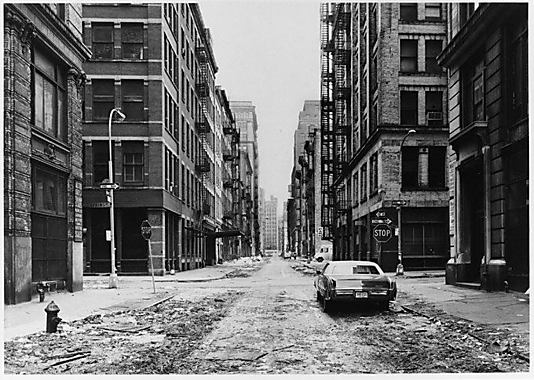
Let me start by saying I used to love Crosby Street. It was one of those rare places where you could be alone in New York City. Amidst the hustle-bustle of Manhattan, blocks from Chinatown and Little Italy, one could walk unmolested in the night for a few precious blocks at least.
Crosby Street used to be empty, literally deserted, after 5 pm. Crosby Street's begin at Howard Street and runs north across Houston to its terminus at the eastern end of Bleecker.  Crosby well into the 1990's had wholesalers and what seemed to be mostly closed store fronts or the backs of premises that fronted east on Lafayette or west on Broadway. I used to frequent an illegal beer hall there named "Red Stripe" which was "licensed" to only serve beer basically and played loud reggae. The bar man, Chris, used see me coming through the front door, pop a beer and top it up with Overproof from a bottle they kept behind the counter for regulars. Yikes!
In fact I was in there watching the Knicks playoff game the night of OJ's Bronco ride with Al, and the game was cut to watch that stupid occurrence and I can recall my reaction being an angry bellowed "What The F**K?!?!?!" followed by a cry of  "Go back to the game!"  It didn't happen...

This is the link to a NYTimes article about French former Arsenal, Barcelona and currently NY Metrostars football superstar Thierry Henry's move to New York City, specifically to a 15 million dollar triplex on Crosby Street:
http://www.nytimes.com/2012/07/16/sports/soccer/soccers-thierry-henry-relishes-the-new-in-new-york.html?nl=todaysheadlines&emc=edit_th_20120716

I looked on Google earth and using the street-view Crosby Street has become a place I no longer recognise.


Thursday, July 5, 2012

The Gem Spa et cetera


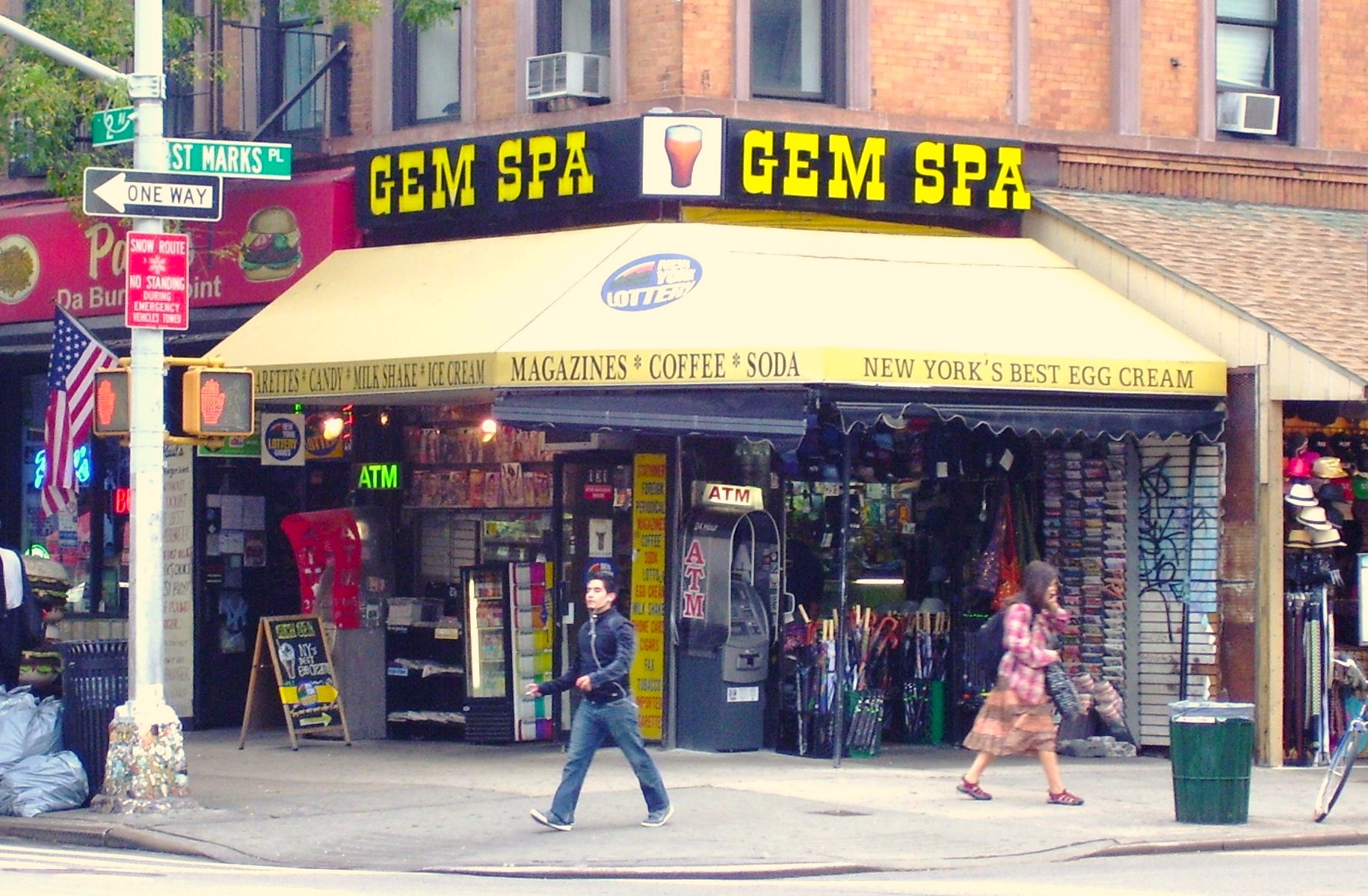
In New York City in the 1980's and 1990's we were fortunate to live near the Gem Spa a soda fountain and newsagent at the corner of St. Marks Place and 2nd Avenue. There is testimony from neighbourhood residents who could remember going into the shop as children before WWI.
The Gem was a holdover from the days of proper soda fountains where you could buy an ice cream or egg cream, a cup of coffee, or a root beer float or sundae. It is one of the very few left. They also were and still are an excellent newsagent. Oh and an "egg cream" is a particular New York fountain soft drink which was created in Brooklyn and which does not include either eggs or cream.
Way back in the misty past of the pre-internet days I would purchase my NY Times, Guardian, Independent, Irish Times and other papers from their extensive selection of papers in English, French, Spanish, Russian, Polish, Italian and Chinese. They were one of the vendors that received and sold the complete Sunday New York Times on Saturday evening.
Antoinette and I used to walk out of a Saturday evening to see and be seen taking in the human carnival that was the East Village in the late 80's leaving Sean at home sleeping soundly in the king position. We'd head up to De Robertis' pastry shop on First Avenue and 11th Street order a half dozen large cannolis and pass by the Gem to pick up the NYT before heading home to put on a pot of coffee. My wife would grab the News sections, I would grab the crossword and Arts sections and plunge into the coffee, paper and connolis.
What really excited me though was their magazine selection. For a narrow little shop they had a huge selection of magazines covering many interests and again in several languages. They had all the British music publications like NME and Melody Maker and The Face in addition to Rolling Stone and other US pop star mags, auto and racing magazines, news mags, fashion mags, glamour mags etc. and best of all they sold no pornography.
I used to eagerly await the arrival of the latest CAR magazine from England with its stellar staff of editors and contributors which included  George Bishop, L. J. K. Setright, Ronald Barker, Mel Nichols, Steve Cropley, Russell Bulgin, Philip Llewellin, James May, Alexei Sayle, its sister Sports Car, and what grew to be my favourite, Classic & Sports Car. The British auto mags had larger format trim sizes and the paper stock was of a higher quality which increased the effect of the photography on their pages exponentially. Classic and Sports Car over time became my favourite due to its focus on a wide variety of vintage vehicles, British, European, and American. It covered too, the vintage racing scene which was much more active in Britain in those days than it seemed to be in the USA and had fascinating classifieds.
They also employed an illustrator who did a dissection of the vehicle that was featured in each issue and they used it to point out places on the car that needed special attention for maintenance and for restoration. Expert restorers were consulted to contribute their opinions and experience. It made for a thorough and invaluable resource for someone like myself who was seeing some of these cars for the first time or for someone who was considering purchasing or restoring one. In short, terrific stuff for motor heads.

A visit to the Gem could cost me quite a bit as it could involve purchasing 2 British magazines at about 5 bucks a pop (the US ones -Road & Track, Car and Driver, Autoweek- fortunately I received gratis at work) a couple of newspapers at $3.25 each, the latest NME $3 and a pack or 2 of cigarettes.
Have I mentioned they were also tobacconists? They stocked Rothmans, Dunhill, Players Navy Cut, Gaulois, Gitanes, Craven A's from Jamaica along with all the US brands, cigars, loose tobacco, and cigarette papers.
In short a small slice of heaven for me and just a few minutes walk from our flat on East 3rd Street.