Monday, July 16, 2012

Crosby, Bleecker, Red Stripe, Thierry Henry


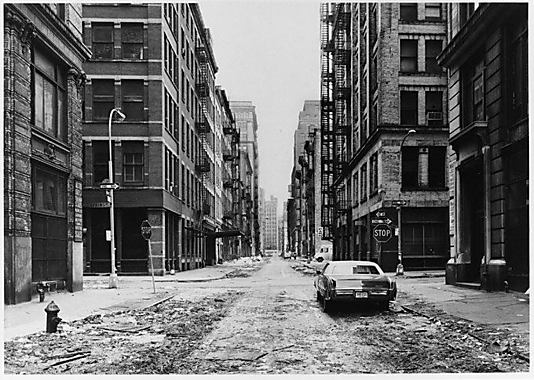
Let me start by saying I used to love Crosby Street. It was one of those rare places where you could be alone in New York City. Amidst the hustle-bustle of Manhattan, blocks from Chinatown and Little Italy, one could walk unmolested in the night for a few precious blocks at least.
Crosby Street used to be empty, literally deserted, after 5 pm. Crosby Street's begin at Howard Street and runs north across Houston to its terminus at the eastern end of Bleecker.  Crosby well into the 1990's had wholesalers and what seemed to be mostly closed store fronts or the backs of premises that fronted east on Lafayette or west on Broadway. I used to frequent an illegal beer hall there named "Red Stripe" which was "licensed" to only serve beer basically and played loud reggae. The bar man, Chris, used see me coming through the front door, pop a beer and top it up with Overproof from a bottle they kept behind the counter for regulars. Yikes!
In fact I was in there watching the Knicks playoff game the night of OJ's Bronco ride with Al, and the game was cut to watch that stupid occurrence and I can recall my reaction being an angry bellowed "What The F**K?!?!?!" followed by a cry of  "Go back to the game!"  It didn't happen...

This is the link to a NYTimes article about French former Arsenal, Barcelona and currently NY Metrostars football superstar Thierry Henry's move to New York City, specifically to a 15 million dollar triplex on Crosby Street:
http://www.nytimes.com/2012/07/16/sports/soccer/soccers-thierry-henry-relishes-the-new-in-new-york.html?nl=todaysheadlines&emc=edit_th_20120716

I looked on Google earth and using the street-view Crosby Street has become a place I no longer recognise.


Thursday, July 5, 2012

The Gem Spa et cetera


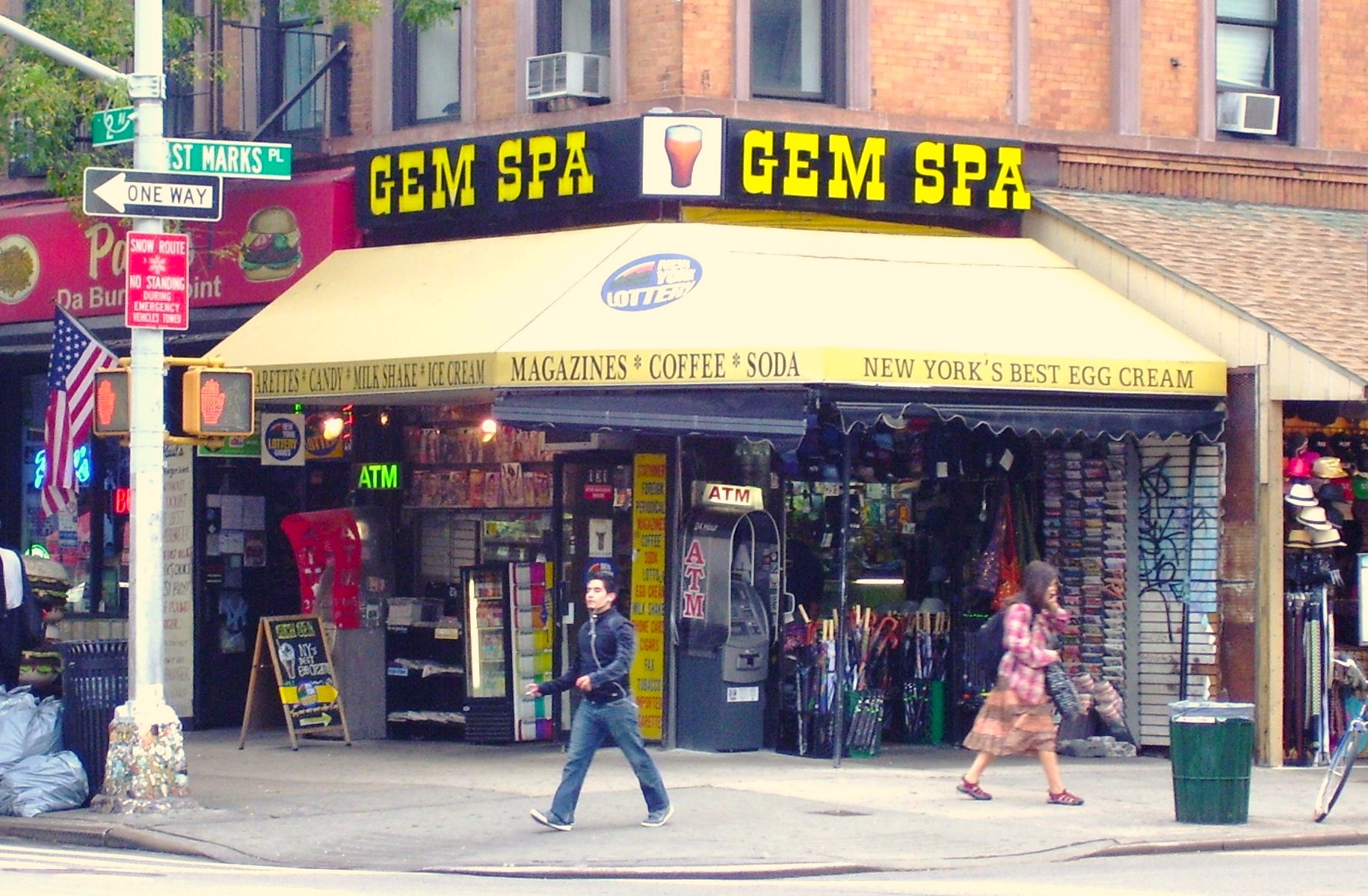
In New York City in the 1980's and 1990's we were fortunate to live near the Gem Spa a soda fountain and newsagent at the corner of St. Marks Place and 2nd Avenue. There is testimony from neighbourhood residents who could remember going into the shop as children before WWI.
The Gem was a holdover from the days of proper soda fountains where you could buy an ice cream or egg cream, a cup of coffee, or a root beer float or sundae. It is one of the very few left. They also were and still are an excellent newsagent. Oh and an "egg cream" is a particular New York fountain soft drink which was created in Brooklyn and which does not include either eggs or cream.
Way back in the misty past of the pre-internet days I would purchase my NY Times, Guardian, Independent, Irish Times and other papers from their extensive selection of papers in English, French, Spanish, Russian, Polish, Italian and Chinese. They were one of the vendors that received and sold the complete Sunday New York Times on Saturday evening.
Antoinette and I used to walk out of a Saturday evening to see and be seen taking in the human carnival that was the East Village in the late 80's leaving Sean at home sleeping soundly in the king position. We'd head up to De Robertis' pastry shop on First Avenue and 11th Street order a half dozen large cannolis and pass by the Gem to pick up the NYT before heading home to put on a pot of coffee. My wife would grab the News sections, I would grab the crossword and Arts sections and plunge into the coffee, paper and connolis.
What really excited me though was their magazine selection. For a narrow little shop they had a huge selection of magazines covering many interests and again in several languages. They had all the British music publications like NME and Melody Maker and The Face in addition to Rolling Stone and other US pop star mags, auto and racing magazines, news mags, fashion mags, glamour mags etc. and best of all they sold no pornography.
I used to eagerly await the arrival of the latest CAR magazine from England with its stellar staff of editors and contributors which included  George Bishop, L. J. K. Setright, Ronald Barker, Mel Nichols, Steve Cropley, Russell Bulgin, Philip Llewellin, James May, Alexei Sayle, its sister Sports Car, and what grew to be my favourite, Classic & Sports Car. The British auto mags had larger format trim sizes and the paper stock was of a higher quality which increased the effect of the photography on their pages exponentially. Classic and Sports Car over time became my favourite due to its focus on a wide variety of vintage vehicles, British, European, and American. It covered too, the vintage racing scene which was much more active in Britain in those days than it seemed to be in the USA and had fascinating classifieds.
They also employed an illustrator who did a dissection of the vehicle that was featured in each issue and they used it to point out places on the car that needed special attention for maintenance and for restoration. Expert restorers were consulted to contribute their opinions and experience. It made for a thorough and invaluable resource for someone like myself who was seeing some of these cars for the first time or for someone who was considering purchasing or restoring one. In short, terrific stuff for motor heads.

A visit to the Gem could cost me quite a bit as it could involve purchasing 2 British magazines at about 5 bucks a pop (the US ones -Road & Track, Car and Driver, Autoweek- fortunately I received gratis at work) a couple of newspapers at $3.25 each, the latest NME $3 and a pack or 2 of cigarettes.
Have I mentioned they were also tobacconists? They stocked Rothmans, Dunhill, Players Navy Cut, Gaulois, Gitanes, Craven A's from Jamaica along with all the US brands, cigars, loose tobacco, and cigarette papers.
In short a small slice of heaven for me and just a few minutes walk from our flat on East 3rd Street.

Tuesday, June 5, 2012

Re: All This Queen Liz Crap Johnny Lydon got it right


BTW do read Johnny Lydon's memoir, "Rotten: No Irish No Blacks No Dogs"


God save the queen
The fascist regime
They made you a moron
Potential H-bomb

God save the queen
She ain't no human being
There is no future
In England's dreaming

Don't be told what you want
Don't be told what you need
There's no future, no future,
No future for you

God save the queen
We mean it man
We love our queen
God saves

God save the queen
'Cause tourists are money
And our figurehead
Is not what she seems

Oh God save history
God save your mad parade
Oh Lord God have mercy
All crimes are paid

When there's no future
How can there be sin
We're the flowers in the dustbin
We're the poison in your human machine
We're the future, your future

God save the queen
We mean it man
We love our queen
God saves

God save the queen
We mean it man
And there is no future
In England's dreaming

No future, no future,
No future for you
No future, no future,
No future for me

No future, no future,
No future for you
No future, no future
For you

A poem for "Jimmy Sligo" et temps perdu


Larceny of Life
a pram by Donal Callum

It was a lunchtime like many
at that that particular time
perched on a stool reading
the Times the Independent or the Echo
Vicarious Byrne grinning evil
never less than 3 but it was always more

In those days we stole
moments of ecstasy
ripped from days of drudgery
extracted milliseconds of joy
from a subway ride
 a  newspaper article
 a carton of coffee
 a smile or a wink

The Heavy for me, the Tool for you
Stretching lunch hour to two
Creating an existence
separate and parallel
entire and complete
a universe Incomprehensible to others
however dear
So near, yet so far.
9th to 4th Broadway to Bowery

The poet the NYU admin the Boston loony the Turk
Books papers music football the lash
Paddies cops Brits musos firemen journos snow shifters
So good we often went back for afters shooting up again
what we realised wouldn'tcouldn'tshouldn't last forever
every moment precious though doomed to fade
But hey, tomorrow's Friday

Monday, April 16, 2012

Morning Murder, a short story


BLAM!

Something heavy hit the zinc fence hard in the yard next to Prong’s bar across the street.

Pi! Pi!

Two shots, two flashes of light.

Then dead silence.

And darkness.

A shadow moved through the door of the zinc fence out onto 6th street in Greenwich Farm and then was gone like it never was.

I had been up to the window in a flash, peering through glass and through the julie mango branches from the first creak of the zinc gate across the street, my wife just now only slightly stirred in her sleep, feeling my absence from her side. I heard her nephew move in the bedroom next door.

“Kenny?” I whispered.
“Yes, John?”
“Somebody get dead”
“Yes, man, seem so”

It was that time of the day when it is technically morning but it is darker than any hour of the night. It is the time when your worst imaginings seem as real as your last breath, when nightmares creep over your fence, and the yard dogs huddle together for safety on the verandah outside of your door.
It was that time of day in Kingston ghettoes that the only ones about were duppies or worse, gunmen.

Since this was 1981 and with general election war time recently finished, the JLP and PNP were sorting out certain movements which would still be felt 25 years later. Here in Greenwich Farm we were just a short walk down the train line from Tivoli, the JLP bastion of power, but PNP was strong here and even WPJ had headquarters up on South Avenue.

But now, one-and-a-half years since the election that ended Michael Manley’s Democratic Socialist dream and ushered in Eddie Seaga’s capitalist reality, politics was starting to take a back seat to the more stark realities of  turf, influence, extortion and something new into the mix for the first time in Jamaica, cocaine. Tribal war started to become a lot more brutal now it was fueled by coke.
Or as one local sage said to me “Guns deh about still, and shot mus’ lick, Massa John.” It was these "runnings" I had come back to Jamaica to document for a US newspaper.

Greenwich Farm had the geographic advantage of being  walking distance to the sea, the wharves, and Customs piers. A lot of the youths in the area used to deal in goods that fell off trucks coming from those piers, and that included staple commodities like flour, rice, cooking oil and gasoline.

“Kenny, you see anything?”
“No sah, me just hear the commotion”

I was still pressed into the corner of the room protected from any possible stray retaliatory bullets by the concrete at my back.

Kenny had now come through the connecting door and joined me by the windows facing the streets.
Both of our eyes strained to see.
My wife started, awake now.
“Wha happen, eh?”
“Just stay there, darling, something g'waan cross the road.”

The light was starting to creep in slowly, softly, as if it too were afraid of being heard or noticed, and all was dead still, almost as if the whole of 6th Street was holding its breath.
“John, yuh did see anything?” Kenny ask.
“ Boy, I hear zinc bang first, then me did see the two flash from the gun, then one man come out a de yard and gone toward Second Avenue. Since then, not a thing.”

Now, I would never admit to anyone outside of this house that I saw anyone or anything at all. It does not pay to admit seeing certain things in Jamaica.
A white Toyota Corolla arrived and pulled up outside the zinc fence  across the way. Three police, one with a big gun got out and went into the yard. They were in the yard for some little while but came out, one of them pulling a lifeless body by its heels. This was unceremoniously left in the dirt parallel to the road outside the zinc door to the yard..

People now started to arrive in their ones and twos, mostly women in curlers and yard clothes, drawn by the blue lights of the police car or by their curiosity about the early morning’s deadly sounds. Kenny recognized someone in the small crowd that had gathered and went outside. He came back in a little while to report:

“Is Danny”
“Who?”
“ Is Danny, from up further ‘pon 6th Street.”
“The youth ?” Danny to my knowledge was not yet 20 years of age.
“Yes man, dem seh dem shoot him over some thiefin’ business”
“What? There’s plenty thief roun’ here who don’t get shot...”
“Dem seh Danny did thief from the wrong local man”
“Oh, I see...”

Still, the police had been on the scene BEFORE anyone else had discovered the body, and since no one on this block even had a phone and they knew right where to look, too, I mused inwardly.
Recently a young, albino recording artiste, or “deejay” named Yellowman had put out a single called “Operation Eradication”. It detailed the exploits of an actual squad of police in Kingston whose brief was to “eradicate” troublesome “criminals” who had in brutal reality now outlived their political usefulness since the very tribal electioneering had ended and new lines had been drawn and scores were being settled. The single was banned from radio airplay, but played day and night on every rum bar jukebox across Jamaica, including the one right next to the yard ironically where Danny’s body now lay.

Danny’s remains laid there in the gutter of Sixth Street until the sun was well up and the ambulance came to carry him to the morgue.

Copyright Donald Callum 2006

Friday, April 13, 2012

Callums in Europe pt 1


Madame Callum on the Place des Vosges

The night after: Antoinette & the fellas relax at La Cartoucherie, Bois des Vincennes
Sebastien et moi-meme by IM Pei's pyramid at theLouvre

I met my girl by the old canal

The sun DOES shine in Dublin, here on Nigel & Sean on Wellington Quay


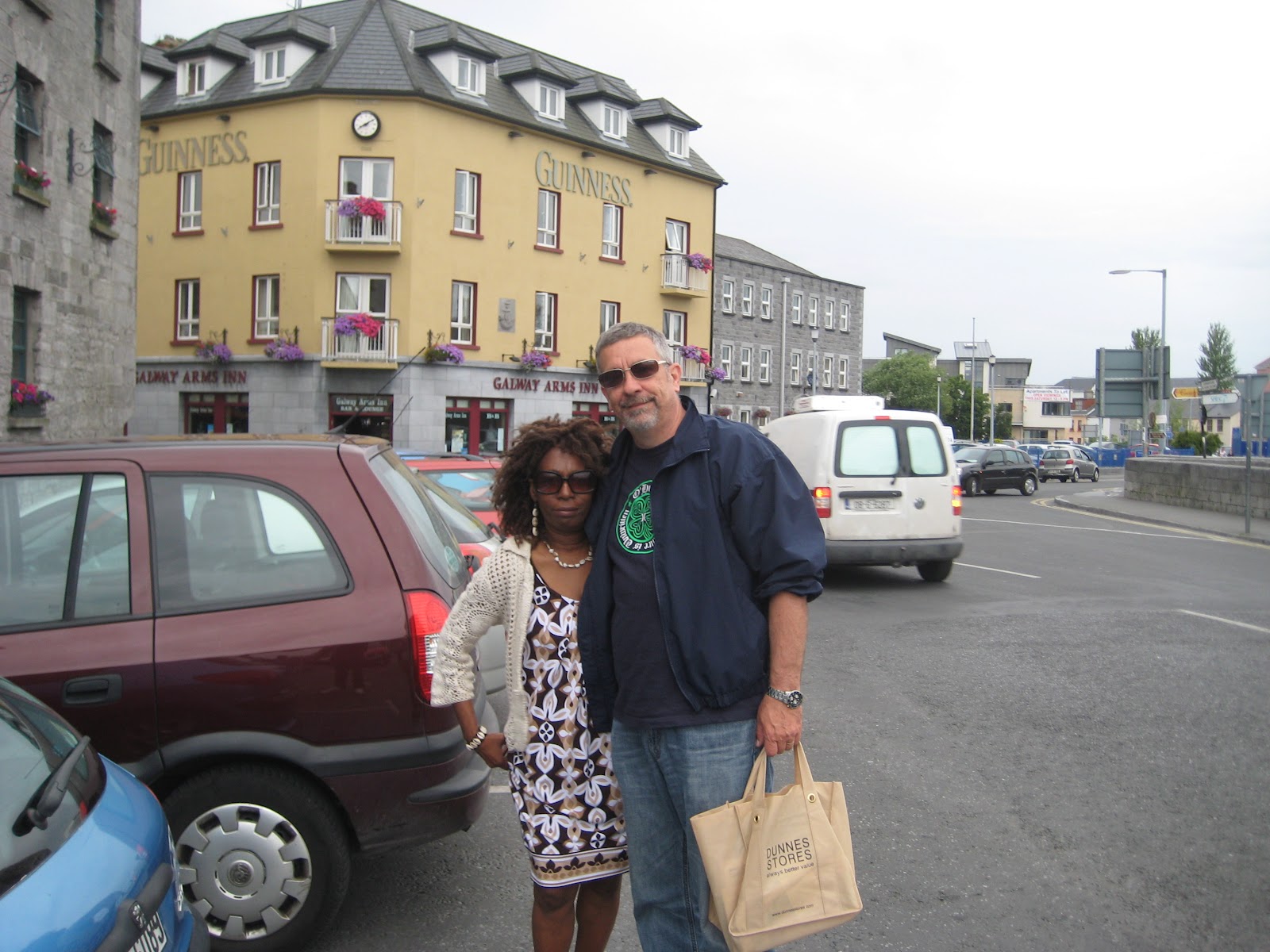
Maybe someday I'll go back again to Galway, if the sun ever comes out that is

Pyramids seem to be a theme, this one is in Merrion Square, Dublin

Bob Andy


Bob Andy and yours truly at Windfall our home in Jamaica

Keith Anderson more commonly known as "Bob Andy" is arguably Jamaica's most respected songwriter.
Interested, no let's make that "captivated" by music from an early age in Kingston Jamaica where he grew up, a chain of events led him to Studio One on Brentford Road. Studio One by the mid 1960's had become the Motown of the Jamaican music scene. Built and controlled by the estimable Clement "Coxsone" Dodd Studio One was  a recording studio, record label (dozens of labels in fact), sound system, music school and manufacturing facility.
Studio One launched the careers of dozens, perhaps hundreds of singers, musicians, and songwriters that created what the world knows today as reggae, and took that music from its status as obscure third world music craze to international cultural phenomenon a fact driven home to me in the 1970's when I heard my mom singing "Three Little Birds" while she was hoovering the living room.
There were other music labels and other studios and other producers in Jamaica and they all played a part, but it was Studio One that was first and foremost in influence and resonance.
It was here in this artistic hot-spot that Bob was able to foment his talent. The way he tells it recording at Studio One was a collaborative process with singers helping each other, the older ones schooling the younger ones the most well-known example of this being the established Joe Higgs drilling newcomers Bob, Peter, and Bunny aka "The Wailing Wailers" in harmony etc.
Bob Andy like many, many others in those times of the early 60's when vocal groups could be found on every street corner of the Bronx, Chicago, Philadelphia, or Kingston, started a vocal group called "The Paragons". They had a number one hit for Studio One penned by Bob Andy called "Love at last" and they were on their way. John Holt joined the Paragons but as Bob felt their voices were too similar he opted to go solo. He wrote and recorded a smash hit called "I've Got to Go Back Home" that became an anthem especially for the burgeoning Jamaican diaspora forced to leave behind their beloved island home. My wife  used to jokingly tell me to stop the car as she wanted to dance when she heard this song on the car radio.
Bob became friends with Jackie Mittoo the talented keyboardist and director of the Studio One house band and together they produced hit songs for themselves and many others.  Bob wrote hit after hit such as "Feeling Soul", "Too Experienced", "Going Home", "Unchained", :My Time", "Fire Burning" and after teaming up with Marcia Griffiths did a huge cover of Nina Simone's "Young, Gifted and Black" which was a hit in the UK as well. Bob has acted in films and continued to write and record and is in fact about to relaunch in 2012 with a follow up to "Reggae Songbook" his classic monster album for which he has not received one penny in royalties though that will hopefully change soon.
Bob's songs have been covered by over 50 different artistes and in Jamaica alone his hits are re-recorded seemingly by each new generation of singers at least by the ones who recognise great songwriting when they hear it.

I only got to know Bob Andy personally over the past couple of years and I have always feared meeting people whose work I have admired as many times the human behind the work may not be...well, let's say the experience may be a disappointment. In Bob's case the opposite has been true and in fact I have gotten to see that he is a very special and charismatic person and in this case the art he has produced comes from an intelligent, thoughtful, caring man who is loved and appreciated by many and not just his fellow musicians.

Here's a couple of links to Bob songs and if interested you can do your own google and youtube searches, I believe you will be hooked too.